Commercial Snow Management Road Salt Guides
How Much Road Salt Do You Need? A Tonnage Guide for Contractors
Work out a season’s salt requirement from lot size, event count and application rate, then turn it into truckloads you can book before the first storm.

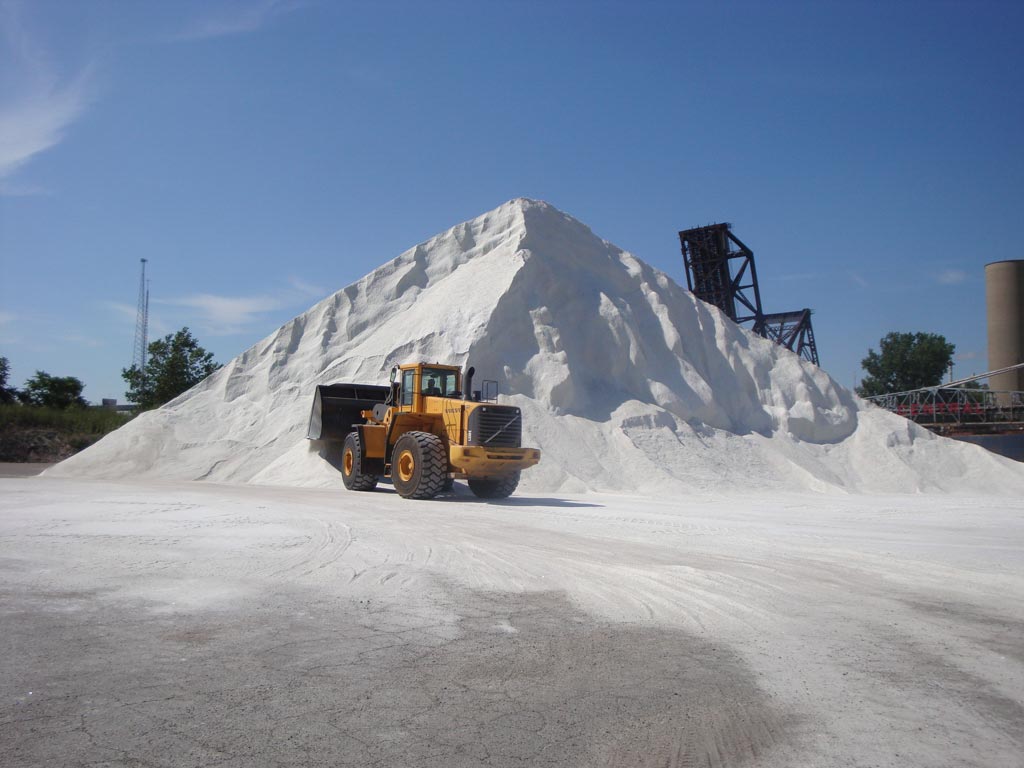
Running out of salt in the middle of a January storm is the most expensive mistake a snow contractor can make. Spot-market prices climb, delivery windows shrink and your service levels slip. The fix is simple: estimate your season’s tonnage in the fall and book it early.
Start with the area you maintain
Add up the paved area on every site you’re responsible for, in square metres. Parking lots, drive aisles, loading docks and access roads all count. Measure sidewalks separately, because they’re usually treated with ice melter rather than bulk salt.
Measuring tips
- Use a mapping tool to trace lots, then subtract islands and landscaped areas.
- Record each site separately. It makes invoicing and re-ordering far easier.
- Flag high-risk zones such as ramps, entrances and fire routes that get extra passes.
Estimate events per season
Look back at the last three winters for each region you serve. Count every event that needed a salt application, not only the snowfalls: freezing rain and refreeze nights count too. Central Ontario sites commonly see 25–40 salting events in a season.
Apply a realistic rate
Application rates depend on pavement temperature, the product you’re using and whether you’re anti-icing or de-icing. The figures below are example planning ranges only. Always follow your site’s salt management plan and the product’s instructions.
| Pavement temperature | Rock salt (g/m²) | Treated salt (g/m²) |
|---|---|---|
| 0 °C to −5 °C | 10–15 | 7–10 |
| −5 °C to −10 °C | 15–25 | 10–15 |
| Below −10 °C | Sand-salt mix recommended | 15–20 |
Turn tonnes into truckloads
Multiply area × rate × events, convert to tonnes and add a 15–20% contingency for heavy seasons. Then divide by your truck size to plan deliveries.
- Triaxle: about 25 tonnes per load, good for sites with limited storage.
- End dump / live bottom: about 45 tonnes per load, the lowest cost per tonne if you have room to stockpile.
Tip: Book part of your season in advance and leave headroom for top-ups. A pre-season quote locks in supply before the first storm drives demand up.
Review mid-season
Check actual usage against your plan every four to six weeks. If you’re tracking ahead, schedule your next load before the forecast turns, not after.